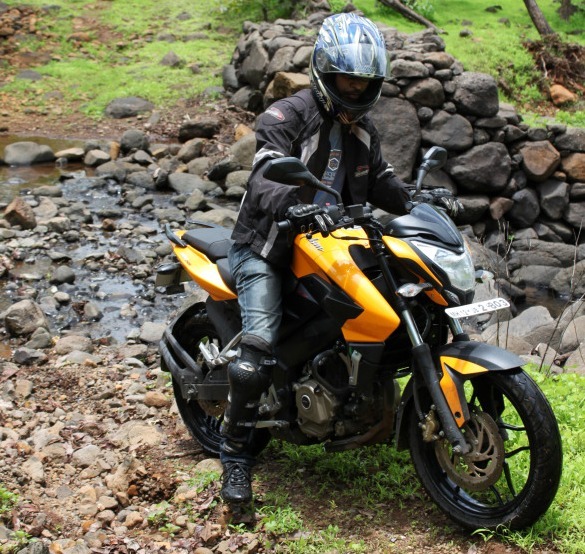
Is there a tangible benefit of the the spark plug used in the DTS-i Triple Spark engine of the Pulsar 200NS?
“Who knows? Just one spark plug could be working; the other two might just be a marketing gimmick.”
I recently came across the above sarcastic comment which was made for the "DTS-i Triple Spark" technology that Bajaj currently employs on the Pulsar 200NS. The Pulsar 200NS sports an engine that has the world’s only 3 spark plug for its single cylinder. Seriously, 3 spark plugs on a single cylinder engine? Is it taking things a bit too far? Is it really necessary? Is there really a benefit for the customer/biker? Or is it really just a marketing gimmick?

Bajaj was the first Indian manufacturer to pioneer twin spark plug engines way back in 2003. Twin spark engines apparently have a benefit over single spark engines as the “air+fuel” mixture is burnt more efficiently. Branded as DTS-i (Digital Twin Sparkplug Ignition), it certainly made a big impact. The proof of which is that a few years later both TVS and Royal Enfield also came out with its own versions of the twin spark technology. TVS put it in its 125 cc Flame model and currently all Royal Enfield models come with twin spark plug engines.
The third spark plug actually has a tangible benefit